
Kondapalli Toys of Andhra Pradesh: History, GI Tag, Tella Poniki Wood, Making Process and Cultural Significance | UPSC, APPSC Group 1, Group 2 & TGPSC 2027 Notes
Kondapalli Toys, popularly known as Kondapalli Bommalu, are among the most famous traditional wooden handicrafts of Andhra Pradesh. Known for their vibrant colours, intricate craftsmanship and cultural significance, Kondapalli toys represent an important part of India’s traditional art and handicraft heritage. The history of Kondapalli toys, Kondapalli Toys GI Tag, Tella Poniki wood, traditional toy-making process and cultural importance are relevant topics for UPSC Civil Services, APPSC Group 1, APPSC Group 2, TGPSC Group 1 and TGPSC Group 2 examinations, particularly under Indian Art and Culture, Andhra Pradesh History and Culture, and General Studies.
Kondapalli toys originate from Kondapalli near Vijayawada in NTR district, Andhra Pradesh, formerly part of Krishna district. The craft is commonly described as approximately 400 years old and has been passed down through generations of traditional artisan families. These handcrafted wooden toys reflect the artistic traditions, rural occupations, mythology and cultural identity of Andhra Pradesh.
1. History and Origin of Kondapalli Toys in Andhra Pradesh
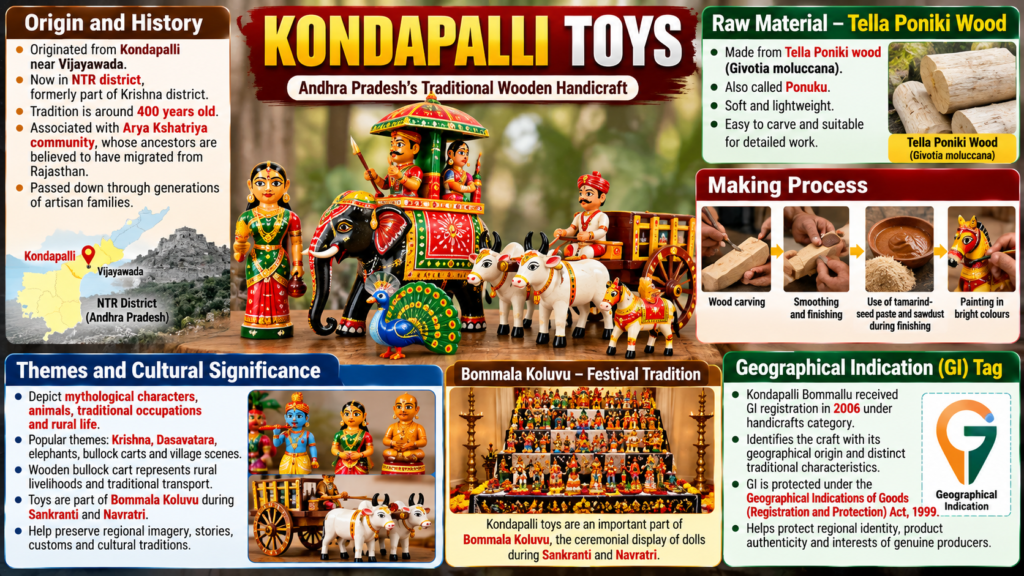
The origin of Kondapalli toys is closely associated with the traditional wooden toy-making community of Kondapalli village near Vijayawada. This centuries-old handicraft tradition has developed into an important symbol of Andhra Pradesh’s regional cultural heritage.
The craft is traditionally associated with the Arya Kshatriya community, whose ancestors are believed to have migrated from Rajasthan several centuries ago. However, this migration narrative forms part of the traditional history of the craft rather than a conclusively established historical record.
Over generations, artisan families developed specialised skills in wood carving, shaping, finishing and painting. Their craftsmanship transformed simple wooden materials into decorative figures depicting Indian mythology, animals, village life and traditional occupations.
Today, Kondapalli Bommalu represent not only the artistic heritage of Andhra Pradesh but also the importance of preserving traditional knowledge, rural craftsmanship and India’s handicraft economy.
2. Kondapalli Toys Making Process – Tella Poniki Wood and Traditional Craftsmanship
The most distinctive feature of Kondapalli toys is the use of Tella Poniki wood, botanically known as Givotia moluccana. This wood is also locally called Ponuku and is valued for its soft, lightweight nature and suitability for detailed carving.
The softness of Tella Poniki wood allows artisans to create intricate designs, expressive faces and decorative figures while keeping the finished toys relatively lightweight.
The traditional Kondapalli toy-making process involves several stages. Artisans first carve the wood into the required shapes, including animals, mythological characters and rural figures. The carved pieces are carefully smoothed and finished to achieve the desired appearance.
Preparations containing tamarind-seed paste and sawdust are used during the finishing process. The wooden figures are subsequently painted in bright colours that highlight their costumes, facial expressions and decorative details.
This combination of specialised wood, manual carving techniques and colourful painting distinguishes Kondapalli toys from many other traditional handicrafts of India.
3. Kondapalli Toys GI Tag and Cultural Significance – Important for APPSC and UPSC
Kondapalli Bommallu received Geographical Indication (GI) registration in 2006 under the handicrafts category. This recognition identifies the craft with its geographical origin and distinctive traditional characteristics.
A Geographical Indication (GI) is a form of intellectual property protection that identifies goods originating from a particular geographical region when their quality, reputation or other characteristics are essentially attributable to that origin.
In India, Geographical Indications are protected under the Geographical Indications of Goods (Registration and Protection) Act, 1999. GI recognition helps protect the regional identity of traditional products, supports authenticity and promotes the interests of genuine producers.
Kondapalli toys depict a wide variety of subjects, including Lord Krishna, Dasavatara, elephants, bullock carts, traditional occupations and village scenes. These themes illustrate the close relationship between the craft and the cultural life of Andhra Pradesh.
The wooden bullock cart is an important example of Kondapalli craftsmanship because it represents rural livelihoods, traditional transportation and agricultural life.
Kondapalli toys also form part of Bommala Koluvu, the ceremonial arrangement and display of dolls during festivals such as Sankranti and Navratri. These displays help preserve mythology, local customs, storytelling traditions and cultural knowledge across generations.
For aspirants preparing for APPSC Group 1 and APPSC Group 2, Kondapalli toys are relevant to Andhra Pradesh Art and Culture, traditional handicrafts and Geographical Indication products. For UPSC and TGPSC examinations, the topic is relevant to Indian cultural heritage, traditional industries and GI protection.
4. Challenges, Preservation and Importance of Kondapalli Toys for Competitive Exams
Despite their cultural importance and GI recognition, Kondapalli toy artisans face several challenges. The limited availability of suitable Tella Poniki wood, uncertain sales, financial pressures and difficulties in sustaining traditional livelihoods affect the continuity of the craft.
The survival of Kondapalli toy-making also depends on the transmission of specialised carving and painting skills to younger generations. Without adequate economic opportunities, maintaining such labour-intensive handicraft traditions becomes increasingly difficult.
Preserving Kondapalli toys requires sustainable raw-material supply, artisan training, access to finance, improved marketing opportunities and promotion of authentic GI products. Stronger market access can help artisans maintain their livelihoods while preserving the traditional identity of the craft.
Kondapalli toys illustrate the connection between cultural heritage, traditional knowledge, rural employment and the handicraft economy. Their preservation contributes to safeguarding India’s diverse regional artistic traditions.
Important Facts for UPSC, APPSC and TGPSC Examinations
| Topic | Important Information |
|---|---|
| Traditional name | Kondapalli Bommalu |
| State | Andhra Pradesh |
| Place of origin | Kondapalli near Vijayawada |
| Present district | NTR district |
| Former district | Krishna district |
| Traditional history | Approximately 400 years |
| Artisan community | Arya Kshatriya |
| Wood used | Tella Poniki / Ponuku |
| Botanical name | Givotia moluccana |
| GI registration year | 2006 |
| GI category | Handicrafts |
| Popular themes | Krishna, Dasavatara, animals, bullock carts and village scenes |
| Associated festivals | Sankranti and Navratri |
| Traditional display | Bommala Koluvu |
| GI legislation | Geographical Indications of Goods (Registration and Protection) Act, 1999 |
Why Are Kondapalli Toys Important for UPSC, APPSC and TGPSC Preparation?
Kondapalli toys provide an important example of how traditional handicrafts contribute to India’s cultural identity, regional economy and preservation of indigenous skills. Understanding their geographical origin, raw materials, GI registration and cultural significance helps aspirants develop conceptual clarity in Indian Art and Culture.
For UPSC Prelims 2027, APPSC Group 1 Prelims, APPSC Group 2 Prelims, TGPSC Group 1 and TGPSC Group 2, candidates should particularly focus on the geographical origin of Kondapalli toys, the botanical name of Tella Poniki wood, the year of GI registration and the craft’s association with Andhra Pradesh’s cultural traditions.
At Abhiram IAS Academy, Ashok Nagar, Hyderabad, aspirants can strengthen their preparation through structured classes, comprehensive study material, exam-oriented test series and mentorship for UPSC, APPSC and TGPSC examinations.
Prepare for UPSC, APPSC Group 1, APPSC Group 2 and TGPSC with Abhiram IAS Academy.
Website: www.abhiramias.com
Contact: 9908764576 | 9908937111
Location: Ashok Nagar, Hyderabad